

Sigmoidoscopy: A Complete Guide to Diagnosis and Treatment of Lower Bowel Problems
Sigmoidoscopy is an important diagnostic procedure used to examine the rectum and the lower part of the large intestine (colon). It helps doctors identify problems such as rectal bleeding, persistent changes in bowel habits, inflammation, polyps and other intestinal conditions. If you are experiencing digestive problems, consulting an experienced gastroenterologist can help you understand whether sigmoidoscopy is necessary.
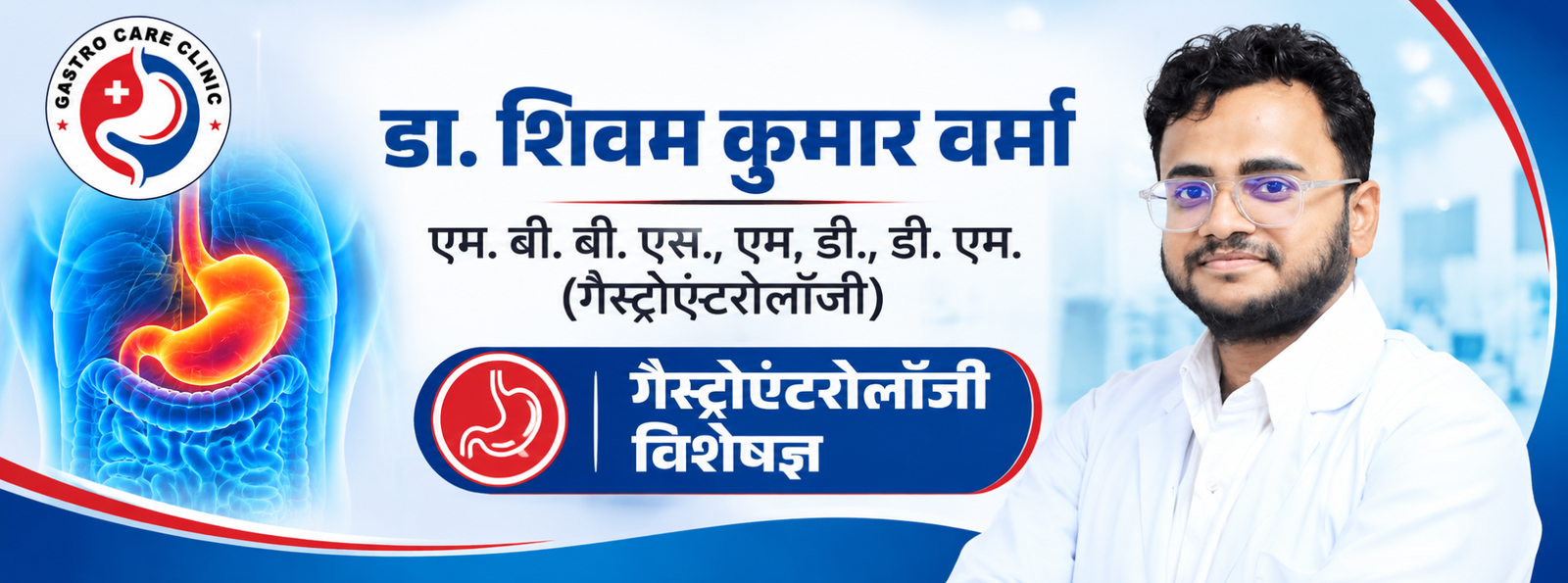
Dr. Shivam Kumar Verma, MBBS, MD (Medicine), BHU, DM (Gastroenterology), is a gastroenterologist at Gastro Care Clinic, Gorakhpur. He provides consultation for various digestive, liver and gastrointestinal conditions.
What Is Sigmoidoscopy?
Sigmoidoscopy is a minimally invasive endoscopic procedure that allows a gastroenterologist to examine the rectum and sigmoid colon, which is the lower part of the large intestine. During the procedure, a thin, flexible tube with a small camera, called a sigmoidoscope, is gently inserted through the anus.
The camera transmits images to a monitor, allowing the doctor to examine the intestinal lining and identify abnormalities. If required, small tissue samples (biopsies) can be collected for laboratory testing.
Sigmoidoscopy is commonly recommended for patients experiencing rectal bleeding, persistent changes in bowel habits or other symptoms related to the lower digestive tract.
Why Is Sigmoidoscopy Performed?
A gastroenterologist may recommend sigmoidoscopy to investigate several gastrointestinal symptoms and conditions, including:
- Rectal Bleeding: To identify possible causes of blood in the stool, such as haemorrhoids, inflammation or polyps.
- Persistent Diarrhoea: To investigate ongoing diarrhoea and identify possible inflammation in the lower colon.
- Chronic Constipation: To examine the lower bowel when symptoms or other findings warrant further investigation.
- Abdominal Pain: To investigate certain types of lower abdominal pain associated with bowel symptoms.
- Changes in Bowel Habits: To evaluate persistent changes in stool frequency, consistency or bowel movements.
- Inflammatory Bowel Disease: To assess inflammation associated with conditions such as ulcerative colitis.
- Colon Polyps: To detect polyps in the part of the colon examined and, when appropriate, remove them.
- Unexplained Anaemia: To investigate possible lower gastrointestinal blood loss in selected patients.
How Is Sigmoidoscopy Performed?
Sigmoidoscopy is generally performed as an outpatient procedure. The process usually involves the following steps:
1. Preparation: The doctor provides instructions to clean the lower bowel before the examination. This may involve an enema or other bowel preparation, depending on the patient’s condition.
2. Patient Positioning: The patient is usually asked to lie on their left side with their knees bent to facilitate the procedure.
3. Insertion of the Scope: The gastroenterologist gently inserts the lubricated sigmoidoscope through the anus into the rectum and sigmoid colon.
4. Examination: Air or carbon dioxide may be introduced to expand the bowel slightly, allowing the doctor to view the intestinal lining clearly.
5. Biopsy or Polyp Removal: If necessary, the doctor may collect tissue samples or remove certain polyps using specialised instruments.
6. Completion: The scope is gently withdrawn after the examination. The procedure commonly takes around 10–20 minutes, although the duration may vary.
Benefits of Sigmoidoscopy
Sigmoidoscopy offers several diagnostic benefits for patients with lower gastrointestinal symptoms.
- Early Detection: Helps identify abnormalities in the rectum and lower colon.
- Accurate Diagnosis: Allows direct examination of the intestinal lining.
- Biopsy Facility: Enables tissue sampling when medically indicated.
- Polyp Detection: Helps detect and, in suitable cases, remove certain polyps.
- Short Procedure: Usually takes less time than a full colonoscopy.
- Minimally Invasive: Does not require surgical incisions.
- Outpatient Procedure: Most patients can return home on the same day.
However, sigmoidoscopy examines only the lower part of the colon. It does not replace a full colonoscopy when examination of the entire colon is needed.
How to Prepare for Sigmoidoscopy
Proper preparation helps the doctor obtain a clear view of the lower bowel.
- Bowel Preparation: An enema or prescribed laxative may be required to empty the lower bowel.
- Dietary Instructions: Follow the diet and fasting instructions provided by your endoscopy team.
- Medication Review: Inform your doctor about all medicines, especially blood thinners and diabetes medications.
- Medical History: Tell your doctor about any existing medical conditions, allergies or previous bowel surgery.
Preparation varies from patient to patient. Always follow the instructions provided by your treating doctor.
What Happens After Sigmoidoscopy?
Most patients can return home on the same day. Mild abdominal cramps, bloating or gas may occur temporarily and generally settle without treatment.
If a biopsy is taken, the sample may be sent to a laboratory for further examination. Your doctor will explain the findings and discuss any necessary treatment or additional tests.
Seek urgent medical attention if you experience severe abdominal pain, heavy rectal bleeding, fever or persistent vomiting after the procedure.
Possible Risks and Complications
Sigmoidoscopy is generally a safe procedure when performed by a trained professional. However, some complications are possible:
- Minor bleeding, particularly after a biopsy or polyp removal.
- Temporary abdominal discomfort or bloating.
- Rare injury or perforation of the bowel.
- Occasionally, an incomplete examination that requires further testing.
Your gastroenterologist will explain the potential risks and benefits based on your individual condition.
Sigmoidoscopy in Gorakhpur – Consult Dr. Shivam Kumar Verma
Dr. Shivam Kumar Verma
MBBS, MD (Medicine), BHU, DM (Gastroenterology)
Gastroenterologist | Gastro Care Clinic, Gorakhpur
If you are experiencing rectal bleeding, persistent diarrhoea, abdominal discomfort or changes in bowel habits, consult a gastroenterologist for an appropriate evaluation. Dr. Shivam Kumar Verma provides consultation for digestive and gastrointestinal problems at Gastro Care Clinic, Gorakhpur.
Address: Beyond AIIMS Thana, Singhariya Chauraha, Gorakhpur, Uttar Pradesh
Appointment: 9569538588 / 9569500988