

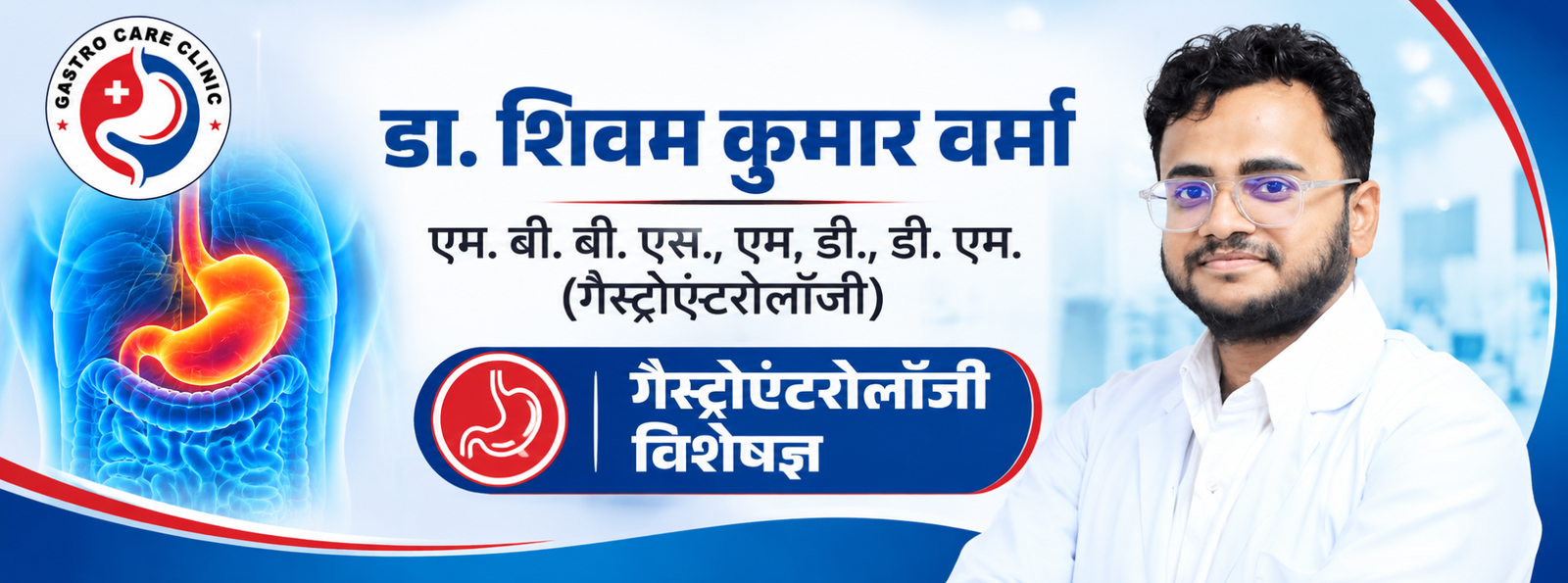
Dr. Shivam Kumar Verma, targeting keywords such as Rectal Bleeding Treatment in Gorakhpur, Best Gastroenterologist in Gorakhpur, and Rectal Bleeding Doctor in Gorakhpur. Medical information is aligned with NIDDK guidance.
Rectal Bleeding: Causes, Symptoms, Diagnosis & Treatment in Gorakhpur
Rectal bleeding means passing blood through the anus, either with stool, on toilet paper, or into the toilet bowl. It can appear as bright red blood or, depending on the source of bleeding, as dark or black stool. While piles (hemorrhoids) are a common cause, rectal bleeding should not always be assumed to be piles because other digestive conditions can also cause bleeding.
If you are experiencing repeated rectal bleeding, abdominal discomfort, changes in bowel habits, unexplained weakness, or blood mixed with stool, consulting a gastroenterologist can help identify the underlying cause.
Dr. Shivam Kumar Verma – Gastroenterologist in Gorakhpur
Dr. Shivam Kumar Verma is a gastroenterologist in Gorakhpur providing evaluation and management of digestive and gastrointestinal problems.
For patients looking for a gastroenterologist in Gorakhpur for rectal bleeding, proper diagnosis is important because treatment depends on the source and severity of the bleeding.
Common Causes of Rectal Bleeding
Rectal bleeding can have several causes. Some common causes include:
1. Hemorrhoids (Piles)
Hemorrhoids are swollen veins around the anus or lower rectum. Internal hemorrhoids may cause bright red bleeding during or after bowel movements, sometimes without significant pain.
2. Anal Fissure
An anal fissure is a small tear in the tissue around the anus. It can cause bleeding and pain, particularly during bowel movements. Constipation and passing hard stools can contribute to fissures.
3. Constipation
Chronic constipation and excessive straining can contribute to hemorrhoids and anal fissures, which may result in rectal bleeding.
4. Colitis
Inflammation of the colon can cause blood in the stool, abdominal pain, diarrhea, and changes in bowel habits. Conditions such as inflammatory bowel disease and certain infections can cause colitis.
5. Polyps
Colon polyps can sometimes bleed. Doctors may recommend colonoscopy when appropriate to identify abnormalities in the colon and rectum.
6. Diverticular Disease
Diverticular disease can sometimes cause lower gastrointestinal bleeding. Even a small amount of unexplained rectal bleeding should be evaluated by a doctor
7. Other Digestive Conditions
GI bleeding can also occur due to ulcers, inflammatory conditions, abnormal blood vessels, or tumors affecting different parts of the digestive tract.
Symptoms Associated With Rectal Bleeding
Depending on the underlying cause, rectal bleeding may occur with:
- Bright red blood on toilet paper
- Blood on the surface of stool
- Blood mixed with stool
- Dark or black, tarry stool
- Pain during bowel movements
- Abdominal pain or cramps
- Constipation or diarrhea
- Mucus in the stool
- Unexplained tiredness or weakness
- Dizziness or light-headedness
Long-term gastrointestinal bleeding can contribute to anemia, which may cause tiredness, pale skin, or shortness of breath.
When Should You See a Gastroenterologist?
You should consult a doctor if rectal bleeding occurs repeatedly, is unexplained, or is accompanied by other digestive symptoms.
Seek urgent medical attention if bleeding is heavy or persistent, or if it occurs with dizziness, fainting, rapid heartbeat, weakness, confusion, or other signs of severe blood loss. Severe GI bleeding can be an emergency.
Diagnosis of Rectal Bleeding
The doctor may ask about your symptoms, bowel habits, medical history, family history, and medicines, including blood thinners or pain medicines such as NSAIDs. A physical examination may also be performed.
Depending on your symptoms, investigations may include:
Blood Tests
Blood tests can help identify anemia and assess the severity of blood loss.
Stool Tests
Stool testing may be used in selected cases to detect blood or investigate possible causes.
Colonoscopy
A colonoscopy allows a doctor to examine the rectum and colon using a flexible camera. It can help identify inflammation, ulcers, polyps, tumors, and other possible causes of bleeding.
Endoscopy and Other Investigations
Depending on the suspected source, upper GI endoscopy, imaging, or other specialized tests may be recommended. Doctors sometimes can diagnose and treat GI bleeding during an endoscopic procedure.
Treatment for Rectal Bleeding
Treatment depends on the underlying cause. There is no single treatment for every patient.
For example:
- Hemorrhoids: treatment may include dietary and lifestyle changes, medicines, or procedures when required.
- Anal fissure: treatment focuses on improving bowel movements and allowing the fissure to heal.
- Constipation: adequate fiber, fluids, physical activity, and appropriate medical treatment may help.
- Colitis: treatment depends on the specific cause.
- Polyps: some polyps can be removed during colonoscopy.
- Active GI bleeding: endoscopic techniques may sometimes be used to control bleeding, while severe cases may require angiography or surgery.
Why You Should Not Ignore Rectal Bleeding
Many people assume that blood in the stool is always caused by piles. Although hemorrhoids are common, rectal bleeding can also be associated with inflammatory bowel disease, polyps, diverticular disease, and colorectal cancer. Therefore, recurrent or unexplained bleeding deserves proper medical evaluation.
Rectal Bleeding Treatment in Gorakhpur
If you are searching for rectal bleeding treatment in Gorakhpur, gastroenterologist in Gorakhpur, or a doctor for blood in stool, getting the correct diagnosis is an important first step.
Gastro care clinic is located on Medical College Road, in front of V-Mart, Chargawa, Gorakhpur, where Dr. Shivam Kumar Verma practices gastroenterology.
Doctor: Dr. Shivam Kumar Verma
Speciality: Gastroenterology
Location: Medical College Road, in front of V-Mart, Chargawa, Gorakhpur
Appointment: +91 9569538588 / +91 9569500988
Conclusion
Rectal bleeding should never be ignored, especially when it is recurrent, unexplained, heavy, or associated with other symptoms. The cause may be something common such as hemorrhoids or an anal fissure, but conditions involving the colon and digestive tract can also produce bleeding.
If you are experiencing blood in stool or rectal bleeding in Gorakhpur, consult a qualified gastroenterologist for appropriate evaluation and treatment rather than self-diagnosing the problem as piles.